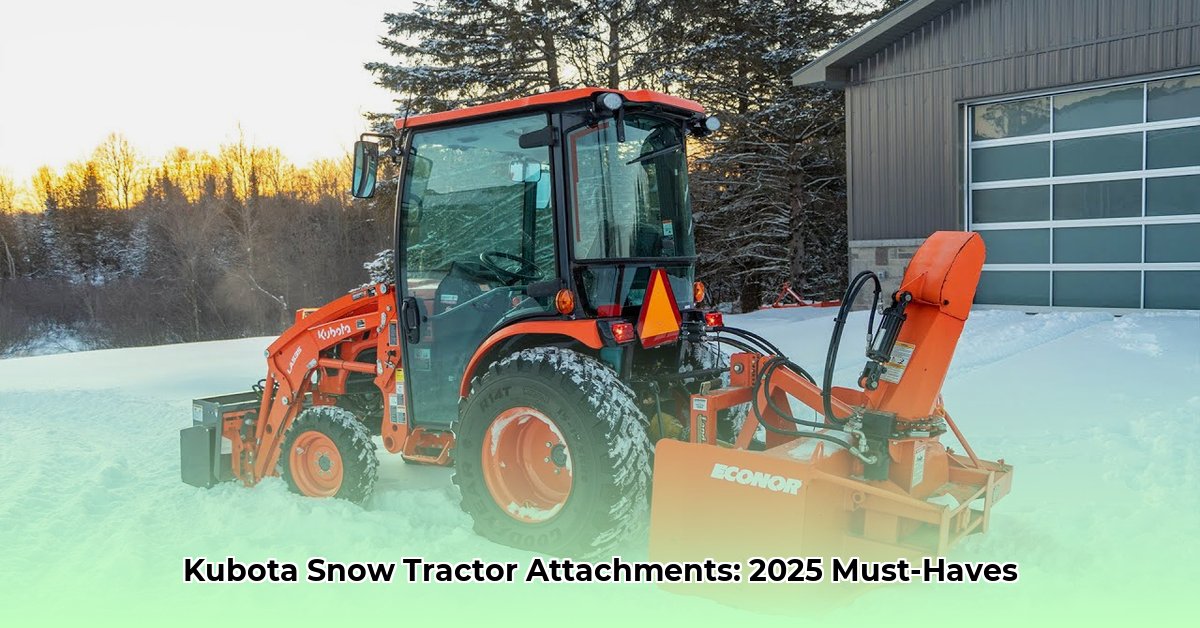
Winter's arrived, and with it, the potential for significant snowfall. If you own a Kubota tractor, you're well-equipped to tackle the challenge, but selecting the right snow-clearing attachment is key. This comprehensive guide will help you choose, install, operate, and maintain your Kubota snowblower attachment, ensuring efficient and safe snow removal all winter long. For more on Kubota tractor attachments, see this helpful resource: Kubota tractor attachments.
Selecting the Right Snowblower for Your Kubota
Choosing the perfect snow-clearing attachment hinges on several factors. Property size is paramount – a small driveway requires a different approach than a large estate. Consider your typical snowfall: light flurries versus heavy blizzards demand different levels of capability. Finally, your budget influences the decision, with high-end models offering advanced features and a higher price tag.
Think of it like this: using a tiny snow shovel to clear a vast parking lot is impractical, just as using an oversized snowblower on a small patio is inefficient and potentially damaging. Finding the right balance is crucial for optimal snow removal.
Kubota Snowblower Compatibility: A Crucial First Step
Before purchasing any attachment, verify its compatibility with your Kubota tractor model. This critical step prevents wasted money and frustration. Consult Kubota's official website 1 or your local dealer for compatibility charts. Incorrect pairing can lead to operational issues and void warranties.
| Kubota Tractor Model | Compatible Snowblower Sizes (inches) | Notes |
|---|---|---|
| BX23S | 48, 54 | Ideal for smaller properties and light to moderate snow |
| B2650 | 60, 72 | Suitable for larger properties and moderate snowfall |
| L3901 | 72, 84 | Best for large properties and heavy, persistent snow |
| Always verify compatibility with the latest Kubota information. |
Kubota Snowblower Types: Features and Applications
Kubota offers various snowblower attachments, each designed for specific tasks. Understanding the differences is vital for making an informed choice.
Smaller Snow Blowers (48-54 inches): These compact units are perfect for smaller properties, walkways, and driveways. They excel in light to moderate snowfall. Their maneuverability is a key advantage in tight spaces.
Larger Snow Blowers (60-84 inches): These powerful machines tackle larger properties and heavy snowfall. They offer superior clearing speed, saving time and effort in challenging conditions.
Hydraulically Rotated Discharge Chutes: This upgrade enhances precision, allowing you to direct snow away from obstacles like houses and fences. This feature significantly improves efficiency and prevents snow buildup. Many models also incorporate electric chute rotation for easier control.
Installing and Operating Your Kubota Snowblower: A Step-by-Step Guide
Safe and efficient snow removal requires proper installation and operation. Follow these steps carefully:
Consult the Manuals: Always read both your Kubota tractor's and snowblower's manuals thoroughly before starting. This information is crucial for safe and efficient operation.
Secure Attachment: Attach the snowblower precisely according to the manufacturer's instructions, ensuring secure fastening. A poorly attached snowblower is dangerous and inefficient.
Engage the PTO (Power Take-Off): Carefully engage the tractor's PTO to transmit power to the snowblower.
Start Slowly: Begin clearing snow at a slow speed to gain confidence and control. Gradually increase speed as needed.
Master Chute Control: Utilize the chute controls to precisely direct snow discharge, maximizing efficiency and preventing unwanted snow piles.
Prioritize Safety: Always wear appropriate safety gear, including gloves, eye protection, and hearing protection.
Maintaining Your Kubota Snowblower: Preventative Care
Regular maintenance extends the lifespan of your snowblower and ensures smooth operation. Here are some key maintenance tasks:
Auger and Impeller Inspection: Regularly inspect the auger (the rotating screw that feeds snow into the impeller) and the impeller (the fan that throws snow out the chute) for wear, damage, or debris. Clean thoroughly as needed.
Hydraulic Line Check: Inspect hydraulic lines for leaks – a leak can lead to reduced performance or even catastrophic failure.
Lubrication: Regularly lubricate moving parts, following the manufacturer's recommendations to prevent wear and tear.
Preventative maintenance is far cheaper than costly repairs further down the road.
Kubota vs. Aftermarket Parts: A Cost-Benefit Analysis
While aftermarket parts may seem cost-effective, genuine Kubota parts offer superior quality, reliability, and longevity. Genuine parts often come with a warranty. Choosing the right parts depends on your budget and risk tolerance. For essential components, genuine parts are recommended, while less crucial parts might benefit from more cost-effective choices. However, thorough research of aftermarket suppliers is crucial to validate quality and ensure compliance with your Kubota's specifications.
Key Takeaways:
- Genuine Kubota parts: Ensure optimal performance, longevity, and warranty coverage, though the upfront cost is higher.
- Aftermarket parts: Offer cost savings but vary in quality and reliability; thorough research is necessary.
- Remanufactured parts: Offer a balance between cost and reliability. Warranties vary.
This guide provides a solid foundation for effectively using Kubota snow tractor attachments. Remember to always consult your owner's manuals and Kubota's official resources for the most detailed and accurate information.